Introduction
The Asian elephant (Elephas maximus) stands as one of the most intelligent, culturally significant, and imperiled large mammals on Earth. <cite index="4-1">As the only living species in the genus Elephas, it is the largest living land animal in Asia and the second-largest living elephantid in the world.</cite> Revered across the cultures of the Indian subcontinent and Southeast Asia for thousands of years, this remarkable animal today faces an uncertain future, squeezed by shrinking habitat and escalating conflict with the humans who share its land.
.jpg)
Appearance and Physical Characteristics
Asian elephants are immediately recognizable by their long trunks ending in a single finger-like tip, large laterally folded ears, and wrinkled grey skin often mottled with patches of depigmentation on the trunk, ears, or neck. On average, fully grown bulls stand about 2.75 metres tall at the shoulder and weigh around 4 tonnes, while females are somewhat smaller, standing roughly 2.4 metres tall and weighing about 2.7 tonnes. The largest bull elephant ever recorded weighed an estimated 7 tonnes and stood 3.43 metres tall at the shoulder.
Unlike African elephants, only male Asian elephants typically grow prominent tusks — female "tushes" are barely visible — and some males, called "makhnas," lack tusks entirely, a trait especially common among Sri Lankan elephants. The species also has a distinctly convex or level back, two hemispherical bulges on its forehead, and a single fingerlike projection at the tip of its trunk, giving it more delicate, coordinated manipulation than its African cousins, which have two.
Three subspecies are currently recognized: the Sri Lankan elephant, the largest and darkest-skinned of the three; the Indian elephant, found across the mainland; and the Sumatran elephant, the lightest in color. A possible fourth subspecies, the Borneo elephant, is notably smaller but has larger ears and a longer tail than its relatives.
Habitat and Distribution
Asian elephants range across the Indian subcontinent and Southeast Asia, from India in the west to Borneo in the east, and from Nepal in the north to Sumatra in the south. They inhabit a wide variety of environments, including grasslands, tropical evergreen forests, moist and dry deciduous forests, and dry thorn forests, occurring from sea level up to elevations exceeding 3,000 metres in parts of the eastern Himalaya.
India holds the largest share of the world's wild Asian elephants, with an estimated population of around 27,000 to 29,000 individuals as of 2019 — nearly three-quarters of the global total. The overall global wild population is estimated between about 48,000 and 52,000 individuals, a fraction of what it once was. Small, isolated populations persist elsewhere, including around 300 elephants in China's Yunnan province and remnant groups in Bangladesh's Chittagong Hills.
Diet and Daily Life
As megaherbivores, Asian elephants consume up to 150 kilograms of vegetation each day, spending roughly half to three-quarters of their waking hours eating. They are generalist feeders, both grazing on grasses and browsing on trees and shrubs, and are known to feed on more than 112 different plant species. Their diet shifts seasonally, with bark making up a larger share of their food during the cooler, dry season. Elephants also require enormous quantities of water — between 80 and 200 litres a day — and rarely stray far from a reliable water source, often visiting to drink, bathe, and wallow.
Social Structure and Behavior
Female Asian elephants and their calves travel together in tight-knit family groups, typically consisting of a few related adult females and their offspring, though larger gatherings of over a dozen individuals have been observed. Males, in contrast, leave their maternal families around adolescence and lead largely solitary lives or form loose, temporary "bachelor groups," rejoining female groups only during the breeding season.
Elephants communicate through a range of vocalizations, including low-frequency growls used for both short and long-distance signaling, squeaking chirps that indicate nervousness, and loud trumpets during moments of extreme excitement. Beyond sound, chemical signaling plays an enormous role in elephant life — pheromones released in urine and through glandular secretions convey information about reproductive readiness, individual identity, and social status.
Musth and Reproduction
Adult male elephants periodically enter a state known as musth, typically occurring annually between the ages of 10 and 20, during which testosterone levels can spike to 100 times their normal level and the bulls become notably more aggressive. This period is accompanied by distinctive secretions from glands located near the eyes, which play a key role in reproductive signaling to females.
Gestation lasts an extraordinarily long 18 to 22 months, among the longest of any land mammal, typically resulting in a single calf weighing about 100 kilograms at birth. Calves nurse for up to three years, and mothers generally wait until a calf is weaned before breeding again, leading to birth intervals of four to five years. Females reach sexual maturity between roughly 10 and 15 years of age, while males mature fully past the age of 25, continuing to grow throughout their lives. Wild Asian elephants typically live to around 60 years old, with some documented individuals living into their late 80s.
Intelligence and Cognition
Asian elephants possess a remarkably large and well-developed neocortex, a trait shared with humans, apes, and certain dolphin species, giving them more cerebral cortex available for cognitive processing than any other land animal. Researchers have documented elephants displaying behaviors associated with grief, tool use and tool-making comparable to great apes, mimicry, cooperation, self-awareness, and complex memory. While some scientists remain more cautious in their interpretations, many researchers who study elephant cognition consider Asian elephants to be highly intelligent, self-aware animals.
Natural Predators
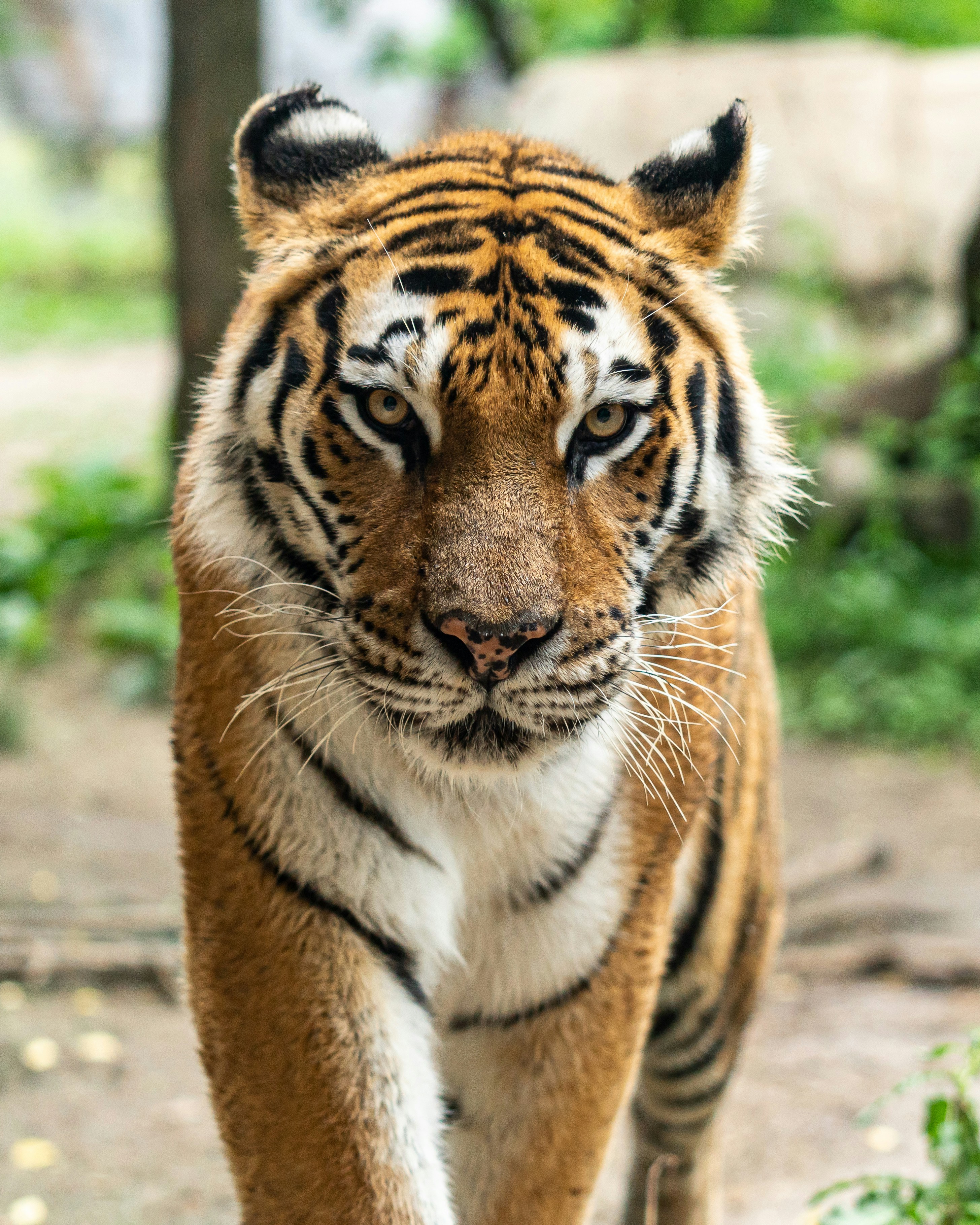
Adult Asian elephants have few natural predators and are largely invulnerable to attack once grown, though tigers occasionally prey on calves that become separated from the herd. In rare, documented instances, tigers have also been known to kill adult elephants, including one case of cooperative hunting by multiple tigers. Interestingly, elephants appear to distinguish between the threat levels posed by different predators, reacting with more fear toward tiger growls than toward those of smaller predators like leopards.
Threats and Conservation Status
The Asian elephant has been listed as Endangered on the IUCN Red List since 1986, with its population having declined by at least 50% over the past 60 to 75 years. The greatest threats facing the species today are habitat loss, degradation, and fragmentation, which increasingly force elephants into conflict with expanding human populations. Poaching for ivory, meat, and — increasingly — skin used in traditional Chinese medicine also continues to threaten wild populations, particularly in Myanmar, where a poaching crisis for elephant skin has intensified since 2010.
Human-elephant conflict poses a severe challenge in many parts of Asia. In India alone, elephants are estimated to kill over 400 people annually and cause millions of dollars in crop damage each year, while elephant populations themselves suffer significant losses from retaliatory killings and habitat encroachment. Border infrastructure, deforestation, and agricultural expansion have all disrupted traditional elephant migration routes, intensifying these conflicts.
Various conservation efforts are underway across the region. India's Project Elephant, launched in 1992, works to protect elephant habitats and establish dedicated reserves. China has designated the species for first-level protection, with Yunnan province maintaining eleven nature reserves. World Elephant Day, observed annually on August 12th since 2012, raises awareness about the pressures facing this iconic species.
Elephants in Captivity
Captive Asian elephant populations face serious welfare and demographic challenges. Elephants in European zoos have less than half the median lifespan of their wild counterparts in protected range-country populations, and captive breeding programs in North America have proven unsustainable, with nearly 30% first-year mortality among captive-born calves. In parts of Southeast Asia, young elephants are still illegally captured from the wild for the tourism industry, where they may be subjected to harsh training methods to make them compliant for performances and tourist rides.
Cultural Significance
Few animals hold as central a place in South and Southeast Asian culture as the Asian elephant. Archaeological evidence from Mohenjo-daro in the Indus Valley indicates that elephants were tamed and used for labor as far back as the Indus Valley Civilisation, with decorated elephants depicted on ancient seals. Throughout history, the species has served as a war mount, a status symbol, a beast of burden, and a hunting platform across South Asia.
The elephant holds deep religious significance in Hinduism, where the god Ganesha is depicted with an elephant's head, and temple elephants are considered bearers of blessings. The animal appears prominently in classical literature, including the Panchatantra fables and Buddhist Jataka tales, and occupies a place in the animal zodiacs of Burmese, Thai, and Sinhalese traditions. Today, the Asian elephant is recognized as the national animal of both Thailand and Laos, and has been declared India's national heritage animal.
Conclusion
The Asian elephant embodies both the deep cultural bonds between humans and wildlife across Asia and the mounting pressures that modern development places on large, wide-ranging species. Its remarkable intelligence, complex social bonds, and long history alongside human civilization make its continued decline all the more urgent — a challenge that will require sustained conservation effort if this magnificent animal is to thrive for generations to come.


.jpg)

_Photo_by_Giles_Laurent.jpg)
.jpg)
.jpg)

0 comments:
Post a Comment